


The British Pest Control Association has reported that its No Small Matter report has gained support from government, MPs, industry bodies and international pest management organisations since its launch.
The independent report, commissioned by BPCA and produced by Pragmatix Advisory, sets out the economic and social value of professional pest management in the UK.
It highlights the sector’s role in protecting public health, supporting business continuity, maintaining housing standards and helping to keep essential services running.
BPCA said the report gives the sector an independent evidence base for future policy and public affairs work, particularly at a time when the professional pest management toolkit is under growing pressure.
Small sector, big impact
No Small Matter found that professional pest management contributes around £1 billion a year in gross value added to the UK economy.
It also estimated that the sector helps households and businesses avoid a further £1.9bn in direct costs each year.
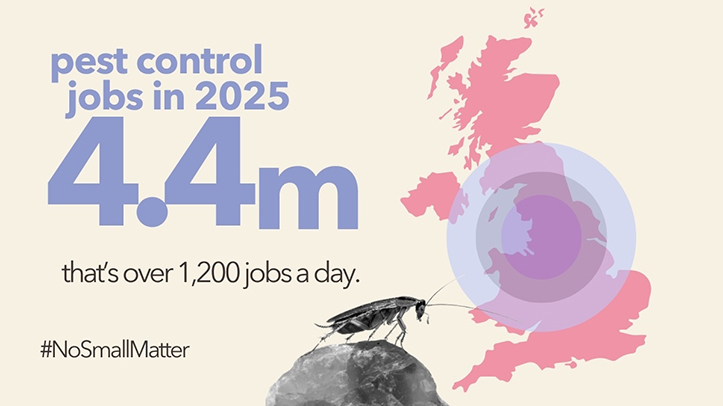
In 2025, pest professionals attended more than 4.4 million client jobs across homes, high streets, hospitals, schools, warehouses, farms and transport hubs in every region of the UK.
BPCA said the figures help demonstrate the consequences of poor pest management, delayed intervention and unnecessary restrictions on trained professionals.
Defra response
Since launch, BPCA has received support from Defra, which commended the association’s work to raise awareness of the value of the pest control sector.
Defra said the report had been “gratefully received” and thanked the sector for its contribution to public health, business continuity and the wider economy.
Report sent to Parliament
BPCA has sent a copy of No Small Matter to all 650 MPs and several key Lords.
The association said the report gives parliamentarians a clear evidence base on the value of professional pest management and the role the sector plays across housing, food safety, public health, business resilience and community wellbeing.
Several BPCA members have also written to their MPs using a template provided by the Association. BPCA said at least one MP visit is now being arranged as a direct result.
Wider industry support
The report has also received comments of support from the Property Care Association and the Chartered Institute of Environmental Health.
BPCA said this backing from allied sectors is important because pest management is often wrongly seen as a reactive service, rather than part of the wider infrastructure that protects people, property and public health.
The report’s findings have also been covered by several trade and sector publications, including a feature by RHE Global exploring why effective pest control supports disease prevention, community wellbeing and business resilience.
No Small Matter also appeared on the front page of Pest magazine, helping to bring the report’s findings directly to the professional pest management sector.
International interest
BPCA said the report has attracted attention beyond the UK, with its sister association, the National Pest Management Association in the USA, recognising the work.
Copies of the report have also been requested from organisations around the world.
Rosina Robson, BPCA chief executive, said: “The response to No Small Matter shows exactly why this work matters. Professional pest management has been overlooked for too long, but when we put clear, independent evidence in front of decision-makers, people listen.
“This report gives BPCA, our members and the wider sector a stronger platform to talk about the work pest professionals do every day to protect public health, homes, businesses and the economy.
“Most importantly, it gives us a bedrock for future lobbying. Serious trade bodies need to lead with evidence, and No Small Matter will help us defend the professional toolkit, raise standards and make the case for our sector for years to come.”
BPCA said it will continue to use the report in its policy, public affairs and communications work, including in conversations with government, MPs, allied organisations and regulators.