


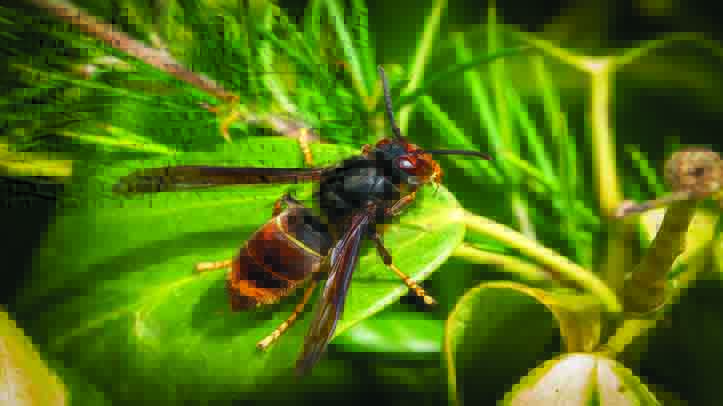
Asian hornet populations are expected to increase rapidly in size as Britain faces another of its hottest years on record.
Asian hornets, which can eat around 11kg of insects in a season, pose a risk to British honeybees as they make up a third of their diets. The remainder is made up of other pollinators such as moths, flies, butterflies and other types of bee.
Asian hornets were first sighted in the UK in 2016, but experts warned last year that they had successfully survived winter for the first time.
Since the first nest was destroyed a decade ago, the number of nests in Britain has risen to 162, up from 24 in 2024. One nest can produce dozens of queens, meaning that if one nest is missed, 30 more can crop up the following year.
What makes 2026 particularly concerning is the acceleration the UK is now seeing in both sightings and geographical spread. The insects were once confined to south-east Asia but warmer weather has allowed them to spread north to Europe.
In the UK, they are most found in the south and south- east regions of England, often emerging from cars, lorries and fruit that have crossed the Channel. They also appear to be inching their way north, with a nest seen in Runcorn, Cheshire, in September last year.
Natalie Bungay, head of membership and technical at BPCA, said: “At this moment in time, pest controllers can’t just go and treat Asian hornets; it’s all about recognising and identifying them, and then reporting them to the Animal and Plant Health Agency (APHA).
“We can’t treat them, but we are certainly important in terms of being able to identify them; the Asian Hornet app allows people to report sightings to the National Bee Unit, who will hunt the hornets if the sighting is validated.”