


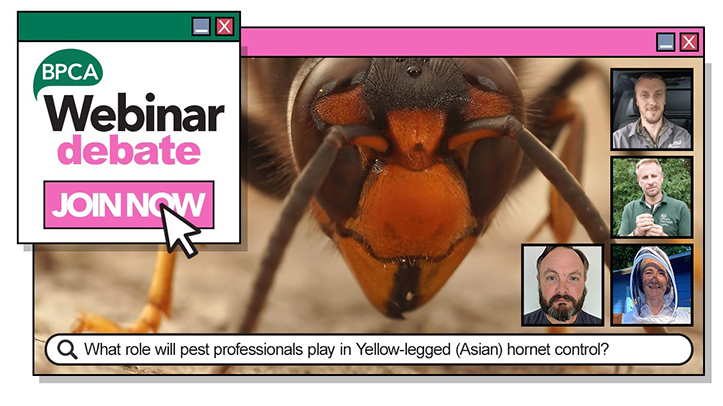
BPCA members can now watch a recorded debate exploring what role pest professionals could play in yellow-legged (Asian) hornet control, with practical insights from the UK and continental Europe.
The 45-minute discussion considers how technicians can support the response through identification, reporting and client awareness, alongside what might change in future.
Chaired by British Pest Control Association’s Natalie Bungay, the panel features Dan Etheridge from the Animal and Plant Health Agency (APHA), Simon Spratley of Bounty Pest Control, Chris Venables of Venables Pest Control and Lucie Chaumeton from the British Beekeepers’ Association.
One distinction is between finding a hornet and finding its nest. Mr Etheridge explains why tracking individual insects is such a substantial part of the response.
“We’re not getting reports of nests, we’re getting reports of hornets,” he said.
His examples reveal how an unreported nest treatment can complicate an investigation, and why reporting remains important even when a technician recognises the species and feels confident about treatment.
Mr Spratley draws on control work in France and Belgium and awareness campaigns in Kent. He also raises the need to protect native insects when responding to an invasive species.
Mr Venables highlights the value of monitoring and involving more people on the ground.
“The more boots on the ground we can get, the better,” he said.
Ms Chaumeton brings a French perspective to the discussion, arguing that continued intervention matters even where the species becomes more established.
“Even when the species becomes more established, it doesn’t mean that you do nothing,” she said.
BPCA members can watch the full discussion now, by clicking here; (login required).