


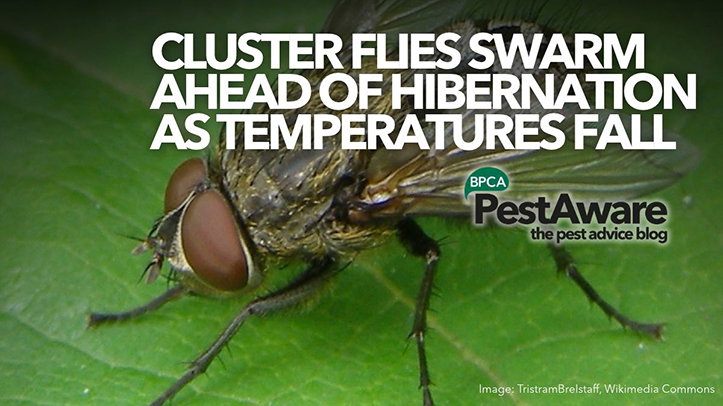
A species of fly which can congregate in large numbers in attics and roof spaces can become a problem in autumn as they gather to hibernate, say experts at British Pest Control Association (BPCA).
Cluster flies can swarm in large numbers in the upper floors of homes and become a nuisance at this time of year, gathering in large groups as they seek sheltered spots in which to hibernate.
Small infestations can be tackled using a vacuum cleaner or aerosol fly killer, but heavy infestations may require help from a pest professional.
Natalie Bungay, head of membership and technical at BPCA, said: “Unfortunately, anyone who has experienced cluster flies swarming in their home will know that they can become a problem.
“A mass of cluster flies are a nuisance in the house, especially in large numbers, and as they may also return to the same location year after year, they can become a recurring issue.”
Around 8mm long and with yellow-coloured hairs on the back, cluster flies are dark grey and have distinct lines or stripes behind the head.
Ms Bungay added: “Female cluster flies lay their eggs on the soil surface where, once hatched, the larvae can burrow into the ground seeking out food such as earthworms.
“This means they don’t present a contamination issue, unlike many other fly species which will lay their eggs in human food.
“However, they can become a problem in homes when they emerge in spring and again when they gather to hibernate in the autumn.”