


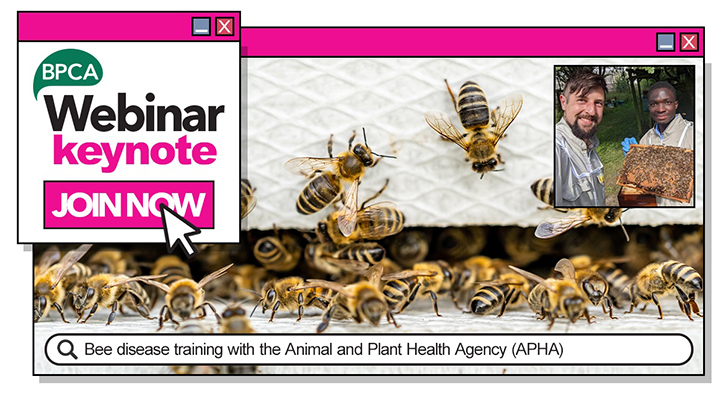
Anyone carrying out live honey bee removals or destructions has a responsibility to protect both bees and biosecurity.
Recognising diseases early and responding properly helps protect our managed and wild bee populations, prevents economic damage and spread of infection.
In a detailed online training session, available exclusively to BPCA members, Jack Silberrad, a regional bee inspector with the National Bee Unit (within APHA), will provide essential guidance on recognising and responding to notifiable bee diseases and pests during live removal work.
Designed specifically for pest professionals and bee-removal specialists, this free session will help you identify, report, and manage suspected disease in line with legislation and biosecurity best practice.
In this member-only keynote, the session will cover:
- Origin of feral colonies & beekeeping landscape in 2020s;
- Inspection technique for, recognition of & field tests for notifiable foulbrood disease in honey bee colonies;
- Hygiene & biosecurity best-practice during live removals & colony relocation;
- Reporting pathway for suspected disease & practical case management on-site & in-apiary;
- Responsibilities concerning record keeping, colony relocation; and
- Recognition & Identification of invasive exotic species; Yellow-Legged Hornet & Tropilaelaps mites.
The session is taking place online via Zoom, between 12.30pm and 2pm on Wednesday, May 13.
CPD points
BPCA Registered: 1.5 points
BASIS PROMPT: TBC
To book your place in the training session, click here.