

Close Menu
Pest MagazinePest Magazine
  • News
    • National Pest Awards
    • BPCA
    • NPTA
    • Companies
    • Local Authority
    • Natural England
    • HSE
    • People
    • Products
    • Best Practice
    • Brexit
    • COVID-19
  • Species
    • Rodents
    • Insects
    • Birds
    • Mammals
  • Magazines
    • April / May 2026
    • Feb / March 2026
    • Dec 2025 / January 2026
    • Oct / November 2025
    • Aug / Sept 2025
    • Supplement: National Pest Awards 2025
    • June / July 2025
    • April / May 2025
  • Library
    • Inserts
    • Supplements
  • Professional Development
    • BASIS
    • Research
    • Stewardship
    • Training
  • Pest Test
  • Key Supporters
    • Bábolna Bio
    • Bell Laboratories
    • Pelsis
    • Envu
    • Lodi UK
    • PelGar International
    • Russell IPM
    • Syngenta
  • Jobs
    • Post a Job
    • Manage Jobs
X (Twitter) LinkedIn
  • Sign-up for weekly news emails
  • Subscribe to Pest Magazine
  • About Us
    • Technical Advisory Board
  • Advertise
  • Contact Us
Facebook X (Twitter) Instagram
Pest Test Log-In
Pest MagazinePest Magazine
  • News
    • National Pest Awards
    • BPCA
    • NPTA
    • Companies
    • Local Authority
    • Natural England
    • HSE
    • People
    • Products
    • Best Practice
    • Brexit
    • COVID-19
  • Species
    1. Rodents
    2. Insects
    3. Birds
    4. Mammals
    5. View All

    Mast year warning ahead of likely grey squirrel tree damage impacts

    10 November 2025

    Helping a luxury car showroom eradicate an infestation and steer clear of rodents

    25 March 2024

    Case Study – Freeing a pig farm of a severe rodent infestation in just 10 days

    11 May 2023

    Chinese takeaway issues apology after video of rats and raw chicken emerges

    14 July 2021

    Hidden cockroach infestations could be spreading unnoticed in UK homes and businesses

    29 May 2026

    Keep windows shut this winter to reduce the bed bug risk

    24 December 2025

    Bed bug warning for people using an electric blanket to keep warm

    16 December 2025

    Insecticide resistance: what pest controllers need to know and how to overcome it

    20 October 2025

    UK & Ireland changes to bird licences for 2026

    12 January 2026

    Check your chimney for jackdaws before autumn arrives

    28 August 2025

    Worcester City Council increases budget to control gull numbers by £35,000

    26 October 2022

    BPCA urges householders and businesses to seek professional advice if birds are becoming a problem

    3 May 2022

    Conservation charity warns of need for joined-up approach and a fast-track to effective grey squirrel controls

    30 May 2025

    Squirrel charity welcomes new legislation on use of gene editing

    14 June 2022

    Ferrets to be removed as permitted target species for the DOC 250 spring trap

    13 April 2021

    Charity says planting of 30,000 hectares of trees must be matched by grey squirrel control

    10 February 2021

    Hidden cockroach infestations could be spreading unnoticed in UK homes and businesses

    29 May 2026

    UK & Ireland changes to bird licences for 2026

    12 January 2026

    Keep windows shut this winter to reduce the bed bug risk

    24 December 2025

    Bed bug warning for people using an electric blanket to keep warm

    16 December 2025
  • Magazines
    1. April / May 2026
    2. Feb / March 2026
    3. Dec 2025 / January 2026
    4. Oct / November 2025
    5. Aug / Sept 2025
    6. Supplement: National Pest Awards 2025
    7. June / July 2025
    8. April / May 2025
    Featured

    Pest 104: April / May 2026

    By Simon King7 April 2026
    Recent

    Pest 104: April / May 2026

    7 April 2026

    Pest 103: February / March 2026

    10 February 2026

    Pest 102: December 2025 / January 2026

    1 December 2025
  • Library
    • Inserts
    • Supplements
  • Professional Development
    • BASIS
    • Research
    • Stewardship
    • Training
  • Pest Test
  • Key Supporters
    • Bábolna Bio
    • Bell Laboratories
    • Pelsis
    • Envu
    • Lodi UK
    • PelGar International
    • Russell IPM
    • Syngenta
  • Jobs
    • Post a Job
    • Manage Jobs
Pest MagazinePest Magazine
News

HACCP assures food safety in pest control

Simon KingBy Simon King16 March 2026No Comments5 Mins Read
LinkedIn Twitter Facebook Email

HACCP risk assessment is an essential part of any food business to assure produce is safe and free from contamination.

All food businesses, particularly those supplying to the big chain supermarkets, should have HACCP (Hazzard Analysis Critical Control Point) based food safety programmes implemented, as a means of managing food safety and keeping food safe – while complying with legal requirements.

Speaking at Pestex 2026 in London this month (March 18-19), Rob Beeken, senior project manager at HACCP International, will highlight pest control is a major part of any food safety programme, since pests can potentially significantly contaminate food.

“In most regions, food businesses are required by law to prevent pests from entering their food premises, and to eradicate pests that find their way inside,” Mr Beeken warned

“The food industry has to ensure that the equipment, materials and services they are using are fit for purpose and food safe.”

HACCP International certification for products and services that carry the registered mark confirms they are food safe, represent best practice and most importantly have been through a comprehensive due diligence process.

Every product is evaluated using a risk-based analysis.  The risks of using that product, or service, within a food business are assessed using the principles of HACCP.

HACCP International certify both pesticides used in the food industry, as well pest management services. This assures the food industry that when using certified products and services the risk of contamination has been assessed.

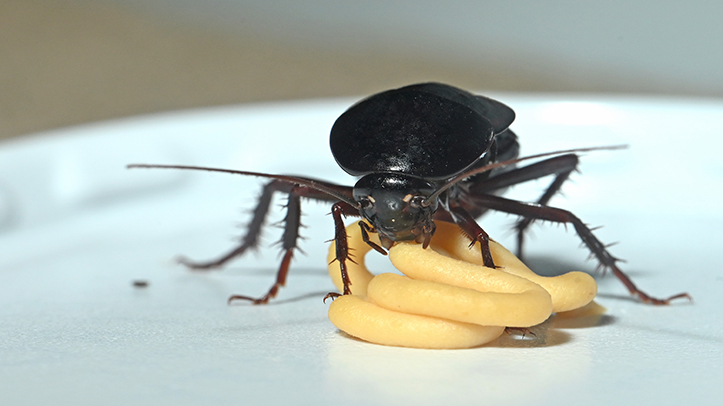
Advion Ant and Advion Cockroach gels have received HACCP Certification in many EU countries, including UK and Ireland, for use in Splash or Spill Zones (SSZ) in food handling areas, such as kitchens, production areas and processing areas.

Risk assessment
Mr Beeken highlighted that when a non-food product or service is used in the food industry it may introduce some hazards.

“We firstly identify the hazards – these hazards can be chemical, microbiological or physical. We conduct a risk assessment and assess the likelihood and severity of those hazards occurring from using that product in a food facility,” he said.

“We then determine how that hazard can be managed – to eliminate the hazard and reduce the risk.”

The overarching questions we ask when evaluating a product for certification are:

  • Does the product make a positive contribution to food safety?
  • Is the product best practice with respect to food safety, and
  • Is the product suitable for use in the food industry?

There’s a comprehensive and thorough evaluation on every pesticide submitted for certification. It is then also re-inspected immediately if there is a formulation change – otherwise every 4-6 years – to make sure the product still meets the strict HACCP International requirements.

“Not all products or services submitted for HACCP International certification pass the inspection process,” Mr Beeken said.

“The reasons products fail could be if a physical, microbiological or chemical contamination risk to food safety has been identified and cannot be managed when the product is used in a food facility in its current form.”

For pesticides one of the most important of these components is toxicity – where we don’t only assess the active ingredient, but also the allergen content. That’s particularly pertinent in products such as cockroach and ant gels, where often allergenic products are used as an attractant.

“Once we have identified the risk or hazard to food safety, we then conduct a risk assessment, i.e. what is the likelihood of occurrence and how severe are the consequences if that risk occurred,” Mr Beeken said.

“HACCP International has a great depth of experience and knowledge in our technical team around the world. After an evaluation, the findings are presented to an independent from the assessment Technical Panel for a final certification decision.

“We also assess products by how they are used in the food industry, with each product is allocated a food zone. Our certification clearly states which food zone a product is certified.

“Essentially, we all want to keep food safe! HACCP International certification assures food businesses, and their customers, that by using a certified pesticide or pest management service their food will be kept safe.

Advion certification
“HACCP International’s certification represents a due diligence process for food businesses, confirming a product is fit for purpose in food businesses that are governed by HACCP based food safety programmes,” he said.

Syngenta Professional Pest Management business manager, Richard Moseley, highlights the HACCP International certification for Advion Gels importantly validates their suitability for use in food preparation areas, such as kitchens, production and processing areas.

“We are proud to receive the HACCP certification for our Advion gels, a testament to our dedication to delivering innovative and sustainable pest control solutions that meet the stringent requirements of the food industry,” said Mr Moseley.

“This certification is highly sought after by the world’s leading food businesses, which operate under stringent food safety and quality standards,” he advocates. They require due diligence in the selection of non-food materials and equipment that have a significant impact on food safety or incidental food contact.

“With this certification, professional pest controllers can confidently use Advion gels also in sensitive environments, such as food processing facilities, restaurants, and other areas where food safety is paramount.”

Share. LinkedIn Facebook Twitter Email
Previous ArticleBPCA launches Advanced Technician and Field Biology preparation courses
Next Article Careers Hub aims to boost recruitment
Simon King

With more than 25 years' experience in business-to-business publishing, Simon is editor of LBM titles Pest and OvertheCounter. Big fan of Manchester United.

Read Similar Stories

Farms hold key to break rodenticide resistance spread

Professional pest management saves UK £1.9bn a year

NPTA welcomes Periscope CFO as new member benefit partner

Latest Stories

Farms hold key to break rodenticide resistance spread

3 June 2026

Professional pest management saves UK £1.9bn a year

2 June 2026

NPTA welcomes Periscope CFO as new member benefit partner

1 June 2026
Key Supporters
  • Pelsis
  • Syngenta
  • Russell IPM
  • PelGar International
  • Lodi UK
  • Envu
  • Bell Laboratories
  • Bábolna Bio
© 2026 Lewis Business Media. All Rights Reserved.
Lewis Business Media, Suite A, Arun House, Office Village, River Way, Uckfield, TN22 1SL

Privacy Policy | Cookie Policy | Terms & Conditions

  • National Pest Awards
  • OvertheCounter
  • Pet Business World

Type above and press Enter to search. Press Esc to cancel.

Pest Magazine
Managing Your Privacy

To provide the best digital experience, we use cookies to store and/or access device information. Consenting to our use of cookies allows us to process data such as reading behaviour. Not consenting or withdrawing consent, may adversely affect certain features and functions.

Functional Always active
The technical storage or access is strictly necessary for the legitimate purpose of enabling the use of a specific service explicitly requested by the subscriber or user, or for the sole purpose of carrying out the transmission of a communication over an electronic communications network.
Preferences
The technical storage or access is necessary for the legitimate purpose of storing preferences that are not requested by the subscriber or user.
Statistics
The technical storage or access that is used exclusively for statistical purposes. The technical storage or access that is used exclusively for anonymous statistical purposes. Without a subpoena, voluntary compliance on the part of your Internet Service Provider, or additional records from a third party, information stored or retrieved for this purpose alone cannot usually be used to identify you.
Marketing
The technical storage or access is required to create user profiles to send advertising, or to track the user on a website or across several websites for similar marketing purposes.
  • Manage options
  • Manage services
  • Manage {vendor_count} vendors
  • Read more about these purposes
Cookie Preferences
  • {title}
  • {title}
  • {title}