


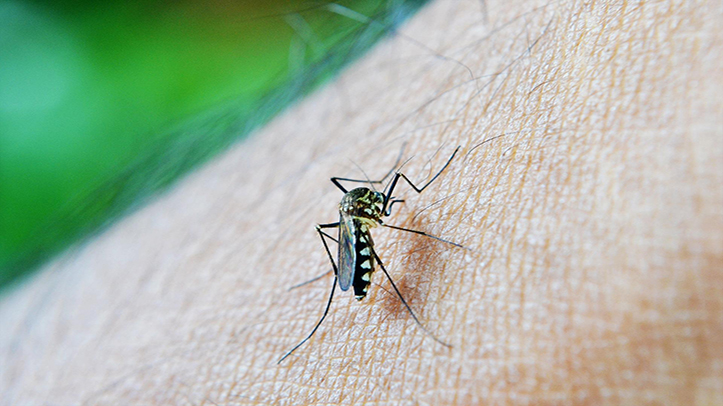
Researchers from Queen’s University Belfast have found a record number of mosquitoes and several nuisance biting species in Northern Ireland (NI) this summer.
The team from the School of Biological Sciences are systematically surveying a variety of urban and rural habitats across NI.
This includes in the Limavady village of Ballykelly, a location in which nuisance biting was previously publicised. There, they have identified wetlands, such as the shore salt marsh, which are potential breeding habitats of nuisance biting species.
This short survey uncovered that these mosquitoes are currently moving from the marsh area in Ballykelly to bite within the other parts of the village, such as nearby woodlands.
Although mosquitoes play an important role in the natural environment, they can pose a health risk. Vector-borne diseases cause over 700,000 human deaths annually worldwide, with mosquitoes posing the greatest burden.
The scale of this threat is connected to environmental degradation, including from urbanisation, agricultural intensification and climate change, with invasive species shifting the distribution, abundance, and activity patterns of vector mosquitoes, their viruses, and the risks of associated pathogens.
In attempt to improve regional knowledge of mosquitoes and associated risks, earlier this year Queen’s launched MosquitoNI, the first public mosquito reporting system in the country.
Since then, the website has received a stream of consistent engagement from the public reporting mosquito sightings, allowing for the identification of nuisance biting locations and species.
Dr Ross Cuthbert from the School of Biological Sciences at Queen’s, said: “Unfortunately, it is just physically impossible for us monitor everywhere in NI for potential nuisance species. So, the information we gather from MosquitoNI is extremely valuable to inform our sampling and understandings.
“We have recently reactively sampled apparent ‘hotspot’ sites, such as Ballykelly, and we would urge people to continue to use the reporting system to allow us to determine additional areas of activity.”
While mosquito-borne diseases have not been detected on the island of Ireland, the collections included species which are known to vector diseases of concern elsewhere in the world, indicating overlooked risks in NI.
Dr Cuthbert added: “Mosquitoes are generally overlooked here, and in many other temperate areas worldwide. The cooler climate on the island of Ireland has been traditionally thought to limit mosquito abundance and stifle disease risk. However, previous research at Queen’s found surprisingly high numbers of mosquitoes across NI.
“Last year, thousands of mosquitoes were collected in specialised traps set around various wetlands and urban sites where mosquitoes breed. So far, around 20 different species have been found across the island of Ireland.”
The team are again conducting mosquito sampling across urban and rural sites of NI and have so far collected thousands of adult and larval mosquitoes in 2026, while uncovering new potential species for the region.