

Close Menu
Pest MagazinePest Magazine
  • News
    • National Pest Awards
    • BPCA
    • NPTA
    • Companies
    • Local Authority
    • Natural England
    • HSE
    • People
    • Products
    • Best Practice
    • Brexit
    • COVID-19
  • Species
    • Rodents
    • Insects
    • Birds
    • Mammals
  • Magazines
    • June / July 2026
    • April / May 2026
    • Feb / March 2026
    • Dec 2025 / January 2026
    • Oct / November 2025
    • Aug / Sept 2025
    • Supplement: National Pest Awards 2025
    • June / July 2025
  • Library
    • Inserts
    • Supplements
  • Professional Development
    • BASIS
    • Research
    • Stewardship
    • Training
  • Pest Test
  • Key Supporters
    • Bábolna Bio
    • Bell Laboratories
    • Pelsis
    • Envu
    • Lodi UK
    • PelGar International
    • Russell IPM
    • Syngenta
  • Jobs
    • Post a Job
    • Manage Jobs
X (Twitter) LinkedIn
  • Sign-up for weekly news emails
  • Subscribe to Pest Magazine
  • About Us
    • Technical Advisory Board
  • Advertise
  • Contact Us
Facebook X (Twitter) Instagram
Pest Test Log-In
Pest MagazinePest Magazine
  • News
    • National Pest Awards
    • BPCA
    • NPTA
    • Companies
    • Local Authority
    • Natural England
    • HSE
    • People
    • Products
    • Best Practice
    • Brexit
    • COVID-19
  • Species
    1. Rodents
    2. Insects
    3. Birds
    4. Mammals
    5. View All

    Mast year warning ahead of likely grey squirrel tree damage impacts

    10 November 2025

    Helping a luxury car showroom eradicate an infestation and steer clear of rodents

    25 March 2024

    Case Study – Freeing a pig farm of a severe rodent infestation in just 10 days

    11 May 2023

    Chinese takeaway issues apology after video of rats and raw chicken emerges

    14 July 2021

    LNPS saves eco school bees

    8 June 2026

    Hidden cockroach infestations could be spreading unnoticed in UK homes and businesses

    29 May 2026

    Keep windows shut this winter to reduce the bed bug risk

    24 December 2025

    Bed bug warning for people using an electric blanket to keep warm

    16 December 2025

    UK & Ireland changes to bird licences for 2026

    12 January 2026

    Check your chimney for jackdaws before autumn arrives

    28 August 2025

    Worcester City Council increases budget to control gull numbers by £35,000

    26 October 2022

    BPCA urges householders and businesses to seek professional advice if birds are becoming a problem

    3 May 2022

    Conservation charity warns of need for joined-up approach and a fast-track to effective grey squirrel controls

    30 May 2025

    Squirrel charity welcomes new legislation on use of gene editing

    14 June 2022

    Ferrets to be removed as permitted target species for the DOC 250 spring trap

    13 April 2021

    Charity says planting of 30,000 hectares of trees must be matched by grey squirrel control

    10 February 2021

    LNPS saves eco school bees

    8 June 2026

    Hidden cockroach infestations could be spreading unnoticed in UK homes and businesses

    29 May 2026

    UK & Ireland changes to bird licences for 2026

    12 January 2026

    Keep windows shut this winter to reduce the bed bug risk

    24 December 2025
  • Magazines
    1. June / July 2026
    2. April / May 2026
    3. Feb / March 2026
    4. Dec 2025 / January 2026
    5. Oct / November 2025
    6. Aug / Sept 2025
    7. Supplement: National Pest Awards 2025
    8. June / July 2025
    Featured

    Pest 105: June / July 2026

    By Simon King10 June 2026
    Recent

    Pest 105: June / July 2026

    10 June 2026

    Pest 104: April / May 2026

    7 April 2026

    Pest 103: February / March 2026

    10 February 2026
  • Library
    • Inserts
    • Supplements
  • Professional Development
    • BASIS
    • Research
    • Stewardship
    • Training
  • Pest Test
  • Key Supporters
    • Bábolna Bio
    • Bell Laboratories
    • Pelsis
    • Envu
    • Lodi UK
    • PelGar International
    • Russell IPM
    • Syngenta
  • Jobs
    • Post a Job
    • Manage Jobs
Pest MagazinePest Magazine
BPCA

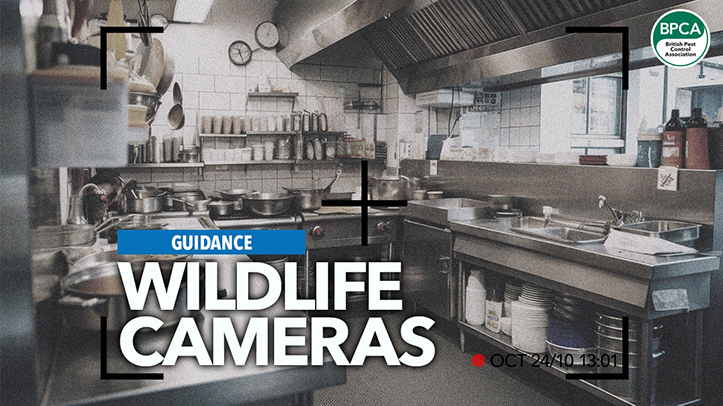
BPCA publishes guidance on ethical use of wildlife cameras in customer premises

Simon KingBy Simon King4 November 2025No Comments2 Mins Read
LinkedIn Twitter Facebook Email

The British Pest Control Association (BPCA) has issued new guidance to help pest management professionals use wildlife cameras legally, ethically and professionally when working on customer premises.

Wildlife cameras are now widely used by technicians to confirm pest presence, assess proofing and monitor activity without being onsite. However, when cameras are placed inside homes or commercial buildings, BPCA warns that pest professionals must comply with strict privacy and data protection laws.

Under the UK General Data Protection Regulation (UK GDPR) and the Data Protection Act 2018, any footage or audio that could identify a person counts as personal data. This means pest companies could be classed as data controllers, making them legally responsible for how that footage is captured, stored and used.

BPCA’s guidance outlines practical steps to stay compliant, including:

  • Always obtaining informed customer consent before installation;
  • Minimising what is recorded and avoiding private spaces such as bedrooms or bathrooms;
  • Keeping footage secure and deleting it once no longer needed; and
  • Maintaining clear documentation, such as a Data Protection Impact Assessment (DPIA) and privacy notices.

The Association reminds members that even incidental footage, such as a homeowner appearing briefly in a clip, may fall under data protection rules.

BPCA’s Technical team recommends that technicians “be transparent, proportionate and professional” every time a camera is installed. That includes explaining what will be recorded, where the camera points and how long the footage will be retained.

Choosing the right equipment
The guidance also explores the pros and cons of different camera types. Trail cameras are best for offline monitoring in sensitive areas, while Wi-Fi and LTE models allow remote access but carry additional cybersecurity risks.

Technicians connecting to a customer’s Wi-Fi are advised to seek explicit consent, use strong passwords, and keep firmware updated to prevent unauthorised access or data leaks.

Good practice and professionalism
BPCA emphasises that responsible camera use builds customer trust and protects technicians from potential legal risks.

“Wildlife cameras are a powerful diagnostic tool, but they come with professional responsibilities,” the guidance notes. “Used correctly, they can transform investigations, but they must never compromise privacy or data security.”

Templates for consent forms, staff briefings and privacy documentation are available for BPCA members in the online Member Area.

Share. LinkedIn Facebook Twitter Email
Previous ArticlePestWorld 2025 breaks all records
Next Article PestTech 2025 gets underway in Milton Keynes
Simon King

With more than 25 years' experience in business-to-business publishing, Simon is editor of LBM titles Pest and OvertheCounter. Big fan of Manchester United.

Read Similar Stories

Killgerm looking for two Area Sales Managers

Fotolec Technologies calls for electric fly killer (EFK) standards

New Government Jobs Guarantee offers pest control employers a chance to invest in future talent

Latest Stories

Killgerm looking for two Area Sales Managers

11 June 2026

Pest 105: June / July 2026

10 June 2026

Fotolec Technologies calls for electric fly killer (EFK) standards

10 June 2026
Key Supporters
  • Pelsis
  • Syngenta
  • Russell IPM
  • PelGar International
  • Lodi UK
  • Envu
  • Bell Laboratories
  • Bábolna Bio
© 2026 Lewis Business Media. All Rights Reserved.
Lewis Business Media, Suite A, Arun House, Office Village, River Way, Uckfield, TN22 1SL

Privacy Policy | Cookie Policy | Terms & Conditions

  • National Pest Awards
  • OvertheCounter
  • Pet Business World

Type above and press Enter to search. Press Esc to cancel.

Pest Magazine
Managing Your Privacy

To provide the best digital experience, we use cookies to store and/or access device information. Consenting to our use of cookies allows us to process data such as reading behaviour. Not consenting or withdrawing consent, may adversely affect certain features and functions.

Functional Always active
The technical storage or access is strictly necessary for the legitimate purpose of enabling the use of a specific service explicitly requested by the subscriber or user, or for the sole purpose of carrying out the transmission of a communication over an electronic communications network.
Preferences
The technical storage or access is necessary for the legitimate purpose of storing preferences that are not requested by the subscriber or user.
Statistics
The technical storage or access that is used exclusively for statistical purposes. The technical storage or access that is used exclusively for anonymous statistical purposes. Without a subpoena, voluntary compliance on the part of your Internet Service Provider, or additional records from a third party, information stored or retrieved for this purpose alone cannot usually be used to identify you.
Marketing
The technical storage or access is required to create user profiles to send advertising, or to track the user on a website or across several websites for similar marketing purposes.
  • Manage options
  • Manage services
  • Manage {vendor_count} vendors
  • Read more about these purposes
Cookie Preferences
  • {title}
  • {title}
  • {title}