


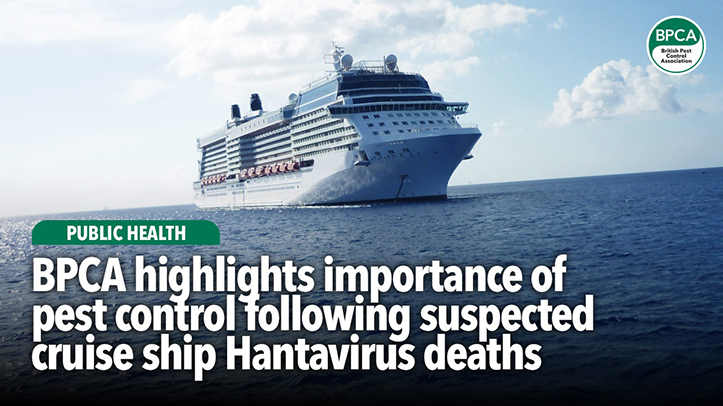
Following the sad news of three deaths due to Hantavirus on board a cruise ship, BPCA has put together some information on the virus and how good pest management can help stop it spreading.
Three people have died after a suspected hantavirus outbreak on a cruise ship travelling from Argentina to Cape Verde.
A 69-year-old UK national is currently in intensive care in Johannesburg, South Africa, while two crew on board are also sick and require urgent care, operator Oceanwide Expeditions said.
These aren’t the first high profile Hantavirus deaths BPCA has reported on recently.
It was reported in February 2025 that Oscar-winning actor Gene Hackman and his wife, Betsy Arakawa, were found dead in their home in New Mexico, US.
It was later found that Ms Arakawa had died after contracting Hantavirus (followed by her husband’s passing around a week later, although allegedly not from the same illness).
What is Hantavirus?
Hantavirus is a potentially deadly virus that primarily spreads to humans through exposure to rodents (such as rats or mice) and their droppings or urine.
Hantavirus symptoms typically develop within one to eight weeks of exposure and resemble flu-like illness in the early stages.
These symptoms include:
- Fever;
- Fatigue;
- Muscle aches (especially in the thighs, hips, and back);
- Dizziness;
- Headaches; and
- Nausea and vomiting.
While relatively rare, infections can lead to severe respiratory illnesses, including Hantavirus Pulmonary Syndrome (HPS), which has a high mortality rate. This condition results in fluid accumulation in the lungs and can quickly become life-threatening without medical intervention.
How hantavirus spreads
Understanding how hantavirus spreads and the importance of rodent control is crucial in preventing outbreaks and safeguarding public health.
Hantavirus is primarily transmitted to humans through direct or indirect contact with infected rodents. The primary modes of transmission include:
Airborne particles
When rodent urine, droppings, or saliva dry out, the virus can become airborne. Inhaling these contaminated particles is the most common way humans contract hantavirus.
Direct contact
Handling rodents, their nests, or contaminated materials can lead to infection, especially if an individual touches their eyes, nose, or mouth afterward.
Bites from infected rodents
Though rare, direct bites from infected rodents can transmit the virus
Food or water contamination
Eating food or drinking water that has been contaminated with rodent excretions can also lead to infection.
How good rodent control can help prevent hantavirus
Fact: pests don’t discriminate. They will enter any property they believe has a good food source, water and harbourage.
Since rodents are the primary carriers of hantavirus, controlling their populations and minimising human exposure to them is essential.
While rodent control on a cruise ship is a different prospect, there are steps that householders can take to minimise their impact.
Sealing entry points
Rodents can squeeze through tiny openings. It’s estimated that mice can squeeze through gaps around 6mm wide (roughly the diameter of the eraser end of a pencil).
Sealing gaps in walls, windows, and doors can prevent them from entering homes and workplaces.
You will need to search for any potential entry points and seal these up with wire wool embedded in quick-setting cement.
You should focus on low level gaps first as these are the most likely areas for mice to enter. You can then consider any higher up vents or gaps.
Check around pipes and windows, and double check the basement.
Housekeeping
Keeping food in sealed containers and cleaning up crumbs and spills reduces the risk of attracting rodents.
Cover any household waste where mice can get access to it, close dustbin lids and cover compost heaps.
Good hygiene practices won’t eliminate a mouse problem, but poor practices will attract them.
Removing nesting sites
Remove potential nesting sites by keeping gardens clean and tidy, cutting back overgrown areas and clearing any piles of wood/debris.
Get rid of any climbing plants that are growing up the side of your building, such as ivy. These are like a natural ladder for rodents, giving them a way of getting into your property.
Safe cleaning practices
When cleaning areas where rodents have been present, it’s essential to wear gloves, a suitable mask, and use disinfectants. If you are sweeping up droppings, do not put them in your indoor bin.
For safe cleaning we also recommend spraying droppings with a biocide first, to reduce the possibility of airborne particulates. They should be damp, not soaking.