


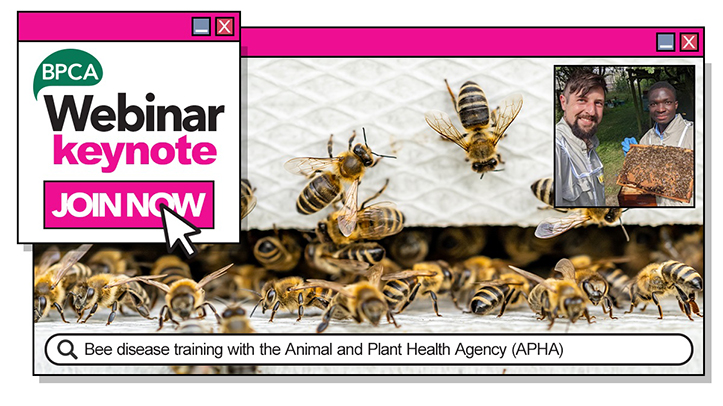
BPCA members can now watch back a well-received keynote webinar delivered by the Animal and Plant Health Agency (APHA), giving pest professionals practical advice on honey bee disease, bee removals and biosecurity.
The session was led by Jack Silberrad, Regional Bee Inspector at the National Bee Unit, who spoke directly to members about the risks associated with unmanaged and feral honey bee colonies.
Aimed particularly at pest controllers involved in bee removals, the webinar gave a clear and useful introduction to what technicians should look for when working around honey bees, including how to recognise healthy and unhealthy brood.
Jack covered key notifiable diseases, including European foulbrood and American foulbrood, and explained what pest professionals should do if they suspect disease during a survey or removal.
The session also looked at reporting, sampling and safely packaging suspected cases, as well as how to contact a local bee inspector for support.
Biosecurity was a major theme throughout the webinar, with practical advice on hygiene, quarantine, fresh foundation, clean tools and good record keeping.
Members also heard about reportable pests, including yellow-legged hornets and Tropilaelaps mites, and the importance of remaining alert when working with honey bee colonies.
BPCA said the session was a valuable opportunity for members to hear directly from APHA and the National Bee Unit on an area where good practice really matters.
While the recording is a useful introduction and refresher, BPCA continues to recommend in-person bee disease training for anyone carrying out bee removals.
The video is now available for BPCA members to watch back online, by clicking here.