


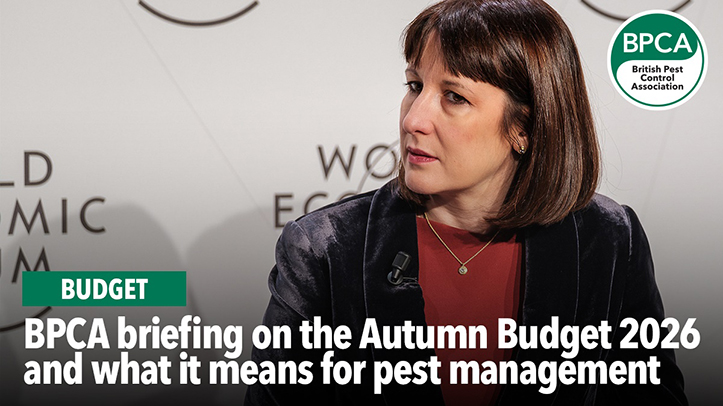
British Pest Control Association (BPCA) has given a mixed verdict on the Autumn Budget 2025, warning that many pest management companies will face higher wage and operating costs despite some positive moves on skills and apprenticeships.
Chancellor Rachel Reeves delivered her Autumn Budget to Parliament on November 26, setting out changes to minimum wage rates, income tax and National Insurance thresholds, pensions and motoring taxes that will affect service businesses across the UK.
Ahead of the Budget, BPCA formally submitted a detailed set of recommendations to the Treasury, calling for reforms to chemical regulation, better access to effective public health pest control tools, and wider use of TrustMark-endorsed professionals across government estates .
Rosina Robson, BPCA Chief Executive, said the package would do little to ease the pressure on smaller firms.
“The Government’s offering for this year’s Autumn Budget makes some welcome steps in supporting training, skills and employment for young people,” Ms Robson said.
“While we appreciate support for the delivery of apprenticeships and the time being given to prepare for many of the changes that affect us, the budget remains disappointing in other areas.
“Not enough support is being offered for small businesses, like our members, who will be facing rising wage bills and higher operating costs.”
Minimum wage rates will rise again from April 1, 2026, with the biggest uplift for 18 to 20-year-olds at 8.5%. The main adult rate will increase by 4.1%. While designed to reflect the cost of living, business groups have warned this could discourage firms from hiring younger workers.
The freeze on income tax and National Insurance thresholds has been extended to April 2031, gradually pulling more workers into higher tax bands and adding pressure to wage budgets in labour-intensive sectors like pest management.
From April 2029, a new £2,000 cap on salary-sacrifice pension contributions will restrict how far higher earners can use pension saving to manage their tax position.
There was some potentially better news for the sector’s future skills pipeline. The Youth Guarantee programme will fund six-month work placements for young people, and a £725 million Growth and Skills Levy package aims to support apprenticeships for under-25s. BPCA notes this could complement future pest management qualifications as it continues to develop its Qualifications Framework.
On transport costs, the Budget confirmed a mileage tax for electric vehicles from April 2028 and the unfreezing of fuel duty from September 2026, with staged increases to reverse the current 5p cut and further rises linked to inflation from 2027. BPCA says these changes will increase operating costs for both electric and conventional fleets.
BPCA will continue analysing the detail of the Budget and is inviting pest professionals to share their views via [email protected].